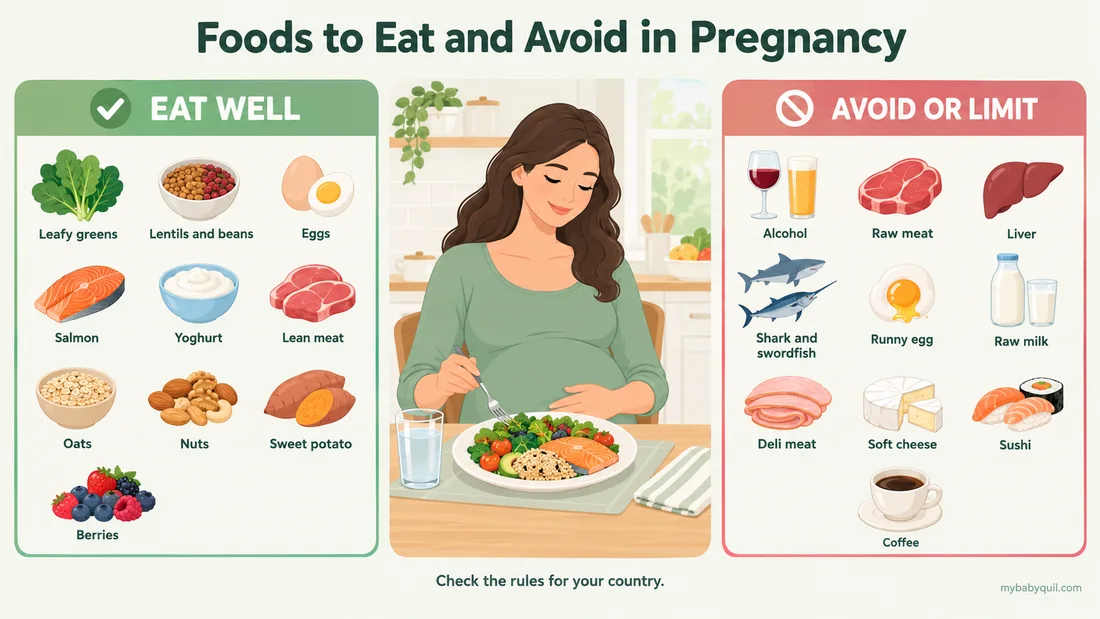
When you are pregnant, almost every meal can bring a quiet second thought. Is this safe to eat? Is that cheese okay? What should I actually be eating to look after myself and my growing baby? You are not alone in wondering, and you do not need to be anxious about it. This guide is here to take the guesswork out: the foods to avoid during pregnancy, what to enjoy, the short list of foods to avoid or prepare differently and why, how advice differs from country to country, and what to do if you have already eaten something on the list.
| Group | Foods |
|---|---|
| Enjoy | Vegetables and fruit (washed), wholegrains, lentils and beans, well-cooked meat, poultry and eggs, cooked fish, pasteurised dairy, hard cheese, nuts (unless allergic). |
| Eat only if cooked until steaming hot | Deli meats and cured meats, pâté, soft and mould-ripened cheeses (and feta and ricotta in Australia and New Zealand), raw sprouts, chilled smoked fish. |
| Limit | Caffeine, oily fish and tuna (weekly limits apply), sugary drinks and snacks high in fat or sugar. |
| Avoid | Raw or undercooked meat, fish and eggs, unpasteurised milk and dairy, liver, shark, swordfish and marlin, and alcohol. |
A healthy pregnancy diet does not need to be complicated or special. The NHS describes it as a varied diet balanced across the week, and says there is no need to eat for two, even with twins or triplets. Hunger often rises, which is normal, and a good breakfast can cut down on grabbing high-sugar or high-fat snacks.
The second half of the story is food safety. When you are pregnant, your immune system works a little differently, so some germs that would barely trouble you normally, listeria especially, can be more serious for you and your baby. That is why guidance names particular foods to avoid or prepare differently. Most are easy to swap, and the rules are simpler once you understand why they exist.
Advice varies between countries, for example on eggs, caffeine and fish. We note where it does, but follow what your own midwife or doctor tells you.
"Superfood" is a marketing word rather than a medical one, but some everyday foods do pack in more of what pregnancy asks for. These ten are easy to find, affordable and safe when prepared properly.
This is a general list, not a prescription. Your needs may differ, so ask your midwife or dietitian, especially if you are vegetarian, vegan or have allergies.
Here is how those foods fit into the food groups across a day or week. You do not need to tick every box every day. Some people also need supplements such as folic acid, iodine or vitamin D, which we cover in our pregnancy supplements guide.
The list below combines advice from the NHS and the US Centers for Disease Control and Prevention (CDC). Both are very similar on the main points, and Australian and New Zealand bodies add a few extras, marked in the table. The aim is to avoid three types of germ: listeria, salmonella and toxoplasma.
| # Food or drink | Why it matters | What to do instead |
|---|---|---|
| 1. Alcohol | No safe amount has been established | Avoid it. Not drinking is the safest choice |
| 2. Raw or undercooked meat and poultry | Salmonella and toxoplasmosis risk | Cook right through, with no pink and juices running clear |
| 3. Liver and liver products | Very high in vitamin A, which can harm a developing baby in excess (NHS) | Choose other iron-rich foods, such as lean red meat, beans and lentils |
| 4. High-mercury fish: shark, swordfish, marlin | Mercury can affect a baby's developing nervous system | See the fish section below for weekly limits |
| 5. Raw or runny eggs, and foods made with them (homemade mayonnaise, mousse, raw batter) | Salmonella | Cook until firm, or use pasteurised egg for uncooked dishes |
| 6. Unpasteurised (raw) milk, cream, yoghurt, butter, ice cream | Can carry harmful bacteria, including listeria | Choose pasteurised dairy |
| 7. Cold deli meats, cold ready-to-eat chicken, cured meats such as salami, pâté and meat spreads | Listeria can grow in chilled, ready-to-eat foods | Heat until steaming hot, or pick shelf-stable sealed versions |
| 8. Soft, mould-ripened and blue cheese (brie, camembert, roquefort). In Australia and New Zealand also feta and ricotta | Bacteria can grow in moist, soft cheese, and rules differ by country | Eat only if cooked until steaming hot, or choose hard cheese |
| 9. Raw and chilled ready-to-eat seafood: sushi and sashimi with raw fish, raw oysters, chilled smoked fish and, in Australia and New Zealand, cooked ready-to-eat prawns | Bacteria, parasites and listeria | Choose freshly cooked fish and shellfish, or sushi with cooked fillings |
| 10. Too much caffeine (coffee, tea, cola, energy drinks) | High intakes are linked to pregnancy loss and low birth weight (WHO) | Keep to about 200 mg a day, and skip energy drinks |
Also worth skipping or handling carefully: raw sprouts (cook them), pre-packed and salad-bar salads, pre-cut melon left out for long, soft-serve ice cream, enoki mushrooms (Australian and NZ advice) and unpasteurised juice.
Listeria is unusual because it can keep growing in the fridge. It is most often found in chilled, ready-to-eat foods that are not cooked again before you eat them. The infection is rare, but in pregnancy it can pass to the baby, which is why guidance is so firm. Heating food until it is steaming hot kills it. That is why a soft cheese that is unsafe cold can be fine in a hot baked dish.
The UK NHS says eggs marked with the British Lion stamp are safe raw or runny, because of the vaccination and safety scheme behind them. That does not apply elsewhere. In most other countries, the safe approach is to cook eggs until the white and yolk are firm, and use pasteurised egg for dishes that are not cooked, such as mousse or homemade mayonnaise.
Fish is worth eating in pregnancy, but mercury builds up in large, long-lived predatory fish and can affect a baby's developing brain and nervous system. The Australian and New Zealand advice below comes from FSANZ via the Victorian Better Health Channel.
| Group (Australia / NZ advice) | Fish | How often |
|---|---|---|
| Most fish and seafood | Salmon, sardines, snapper, prawns, canned tuna and most other fish | 2 to 3 serves a week (a serve is about 150 g) |
| Higher mercury, option 1 | Orange roughy (sea perch), catfish | 1 serve a week, and no other fish that week |
| Higher mercury, option 2 | Shark (flake), swordfish, broadbill, marlin | 1 serve a fortnight, and no other fish that fortnight |
This happens to a lot of people, and most do not become ill, but it is worth taking seriously. Listeria infection can cause no symptoms or only mild, flu-like ones, and these can start anywhere from a few days to about three months later. Note what you ate and when, and contact your midwife or doctor to let them know, especially if you are worried. If a fever, chills, aches, headache, vomiting or diarrhoea develops, seek medical advice promptly rather than waiting for it to pass, because early treatment can protect your baby. If your baby's movements change, get checked straight away.
The rules are cautious because listeria is serious even though uncommon. There is no known safe amount for high-risk items, so pick the safer alternative instead, and if you have already eaten some, see the section above.
The NHS says yes, unless you are allergic. There is no need to avoid them in pregnancy.
Information is drawn from the NHS, Australian and New Zealand food authorities, the CDC and WHO. Guidance differs between countries and changes over time, so check with your own midwife or doctor.
This page is general information and not medical advice. It does not replace advice from your doctor, midwife or dietitian, who can tailor it to your health, allergies and country.
The BabyQuil App is free for pregnancy and newborn tracking. Keep notes, appointments and questions for your midwife in one place.
Get BabyQuil — free on iOS