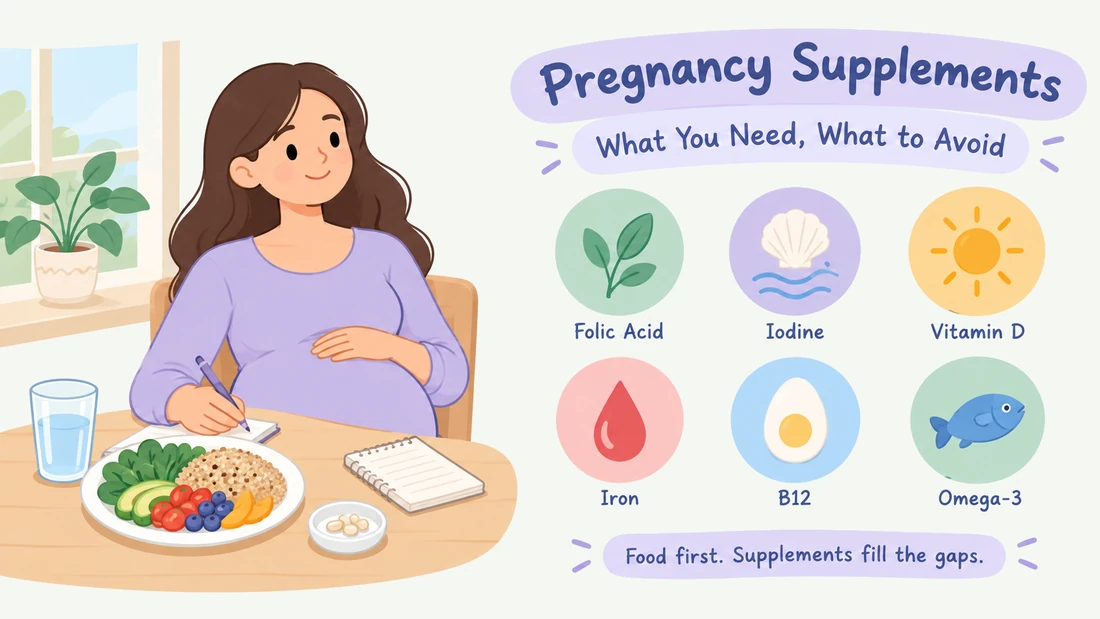
Shelves of bottles labeled "pregnancy-safe," friends with strong opinions, and advice that seems to change depending on which website you read — supplements can feel like another exam you didn't study for. Here's the calmer version: a handful of nutrients matter for most people, a healthy diet covers most of the rest, and the right list depends on where you live, what you eat, and your health. This guide covers what each supplement does, who it's recommended for, who should check first, and what deficiency can look like, with a summary table to keep it all straight.
Check with your doctor, midwife, or pharmacist before starting any supplement, including herbal products and vitamins, especially if you take regular medicines or have an existing condition such as a thyroid problem. Look at the label of any multivitamin too: contents vary, and some contain vitamin A, which is best avoided in pregnancy.
| Supplement | What it does | Who may need it | Who should check first or avoid | Signs of deficiency (and a caution) |
|---|---|---|---|---|
| Folic acid (folate) | Helps the baby's spine and brain form, and lowers the risk of neural tube defects such as spina bifida. | Almost everyone planning a pregnancy or in early pregnancy, ideally from before conception through about 12 weeks. Typical advice is 400 micrograms (mcg) a day in the UK and US, and 400–500 mcg in Australia. | Higher doses (4–5 mg) are for specific situations, such as a previous neural tube defect, diabetes, some epilepsy medicines, or some blood conditions. They're prescribed, not self-chosen. | Tiredness and paleness (a type of anemia), but often nothing at all. The main concern is the baby's early development, so symptoms aren't a useful guide. |
| Iodine | Needed to make thyroid hormones, which support the baby's brain and nervous system development. | Australia: 150 mcg a day for everyone planning a pregnancy, pregnant, or breastfeeding, as recommended by the National Health and Medical Research Council (NHMRC). Many US professional bodies suggest the same dose. The National Health Service (NHS) in the UK doesn't name iodine in its routine advice. | Anyone with a thyroid condition should talk to their doctor first. Kelp and seaweed supplements aren't recommended because their iodine content varies. | Often none. Low intake can cause a swollen thyroid (goitre) or an underactive thyroid, and too much iodine can cause similar problems. The main concern is the baby's brain development. |
| Vitamin D | Helps your body use calcium for the baby's bones and teeth. | UK: 10 mcg (400 international units, IU) a day, particularly in autumn and winter and all year if you get little sun or have black or brown skin. Pregnancy, Birth and Baby lists vitamin D among its recommended supplements, but routine blood testing isn't recommended for everyone: testing is for people at risk of deficiency, so ask your doctor or midwife whether you need one. | Don't take more than 100 mcg (4,000 IU) a day. Higher doses should only be taken if a doctor advises it. | Often none. Severe deficiency can affect bones and muscles. |
| Iron | Helps make the extra blood you and your baby need. | When a blood test shows low iron or anemia. In the UK, midwives check at booking and again around 28 weeks. US guidance includes iron in a daily prenatal vitamin. | Iron is usually recommended after a blood test rather than started on your own. It commonly causes constipation, stomach pain, and dark stools. | Tiredness, paleness, breathlessness, dizziness, headaches, palpitations. These overlap with ordinary pregnancy, so a blood test is the only reliable check. |
| Vitamin B12 | Supports your nerves and blood cells, and the baby's developing nervous system. | People following a vegan diet (Australian dietary guidelines advise a supplement) and many vegetarians, unless they eat B12-fortified foods. | If you have a condition that affects absorption, you may need treatment such as injections rather than tablets. | Tiredness, pins and needles or numbness, anemia. |
| Omega-3 fats | Long-chain fats called DHA (docosahexaenoic acid) and EPA (eicosapentaenoic acid), found in oily fish and in fish or algae oil supplements. | Not a universal recommendation. A Cochrane review found omega-3 supplements reduce preterm birth, though they probably increase post-term pregnancy. Ask your provider. | Avoid cod liver oil (high in vitamin A). Check any fish oil product with your provider first. | Not usually identified by symptoms. |
| Calcium | Builds the baby's bones and teeth. | Mainly from food. The World Health Organization (WHO) recommends supplements, from about 20 weeks, only where dietary calcium is low, to lower the risk of pre-eclampsia. | Don't self-prescribe high doses. When calcium is prescribed, it's usually taken a few hours apart from iron. | Often no clear symptoms. |
| Vitamin A (retinol) | Needed in small amounts, which food normally provides. | Not recommended as a supplement. | Avoid supplements containing vitamin A (retinol), cod liver oil, and liver or liver products. Too much can harm the baby's development. Check multivitamin labels. | Not applicable: avoid supplementing. |
| Herbal supplements and teas | Marketed for everything from sleep to nausea. | Not routinely recommended. There's very little research on how herbal products affect pregnancy. | Check with your doctor, midwife, or pharmacist before taking any. "Natural" doesn't mean safe in pregnancy. | Not applicable. |
These are general recommendations from health bodies, not a prescription. What's right for you depends on where you live, your diet, your health, and any medicines you take.
If you've compared notes with someone overseas and your supplement lists don't match, you're not imagining it. Health bodies read the same evidence in the context of their own populations' diets and soils:
Across all three, the common thread is the same: folic acid first, a healthy diet for almost everything else, and extra supplements for specific needs.
Folic acid has the clearest, most consistent advice worldwide. Neural tube defects such as spina bifida develop very early, often before you know you're pregnant, which is why guidance says to start before conception where possible and continue through the first 12 weeks. The NHS says ideally about three months before; ACOG says at least one month before. If you're already pregnant and haven't started, start now. Food helps, but it's hard to get enough from diet alone, which is why a supplement is advised.
Typical doses are 400 micrograms a day in the UK and US, and 400–500 micrograms in Australia, depending on which Australian body you ask. A higher dose is advised for some people, for example after a previous pregnancy with a neural tube defect, or with diabetes, certain epilepsy medicines, some blood conditions such as sickle cell disease or thalassemia, or a higher body mass index (BMI). The UK uses 5 milligrams and ACOG uses 4 milligrams, both through a doctor. Please don't choose a higher dose yourself; talk to your doctor or midwife, who can prescribe it.
Iodine is the clearest example of why advice differs by country. Some parts of Australia have soils low in iodine, and the NHMRC recommends that everyone who is pregnant, breastfeeding, or planning a pregnancy takes a 150 microgram supplement daily. The US National Institutes of Health notes that many professional organizations suggest the same dose, but that not every prenatal vitamin contains iodine, so check the label. Two safety points: if you have a thyroid condition, talk to your doctor before taking any, and avoid kelp or seaweed supplements, whose iodine content varies. Too much iodine can cause some of the same problems as too little.
Vitamin D helps your body use calcium for the baby's bones. The NHS recommends 10 micrograms a day, particularly through the months when sunlight is too weak to make enough, and all year if you get little sun or have black or brown skin. Pregnancy, Birth and Baby lists vitamin D among the supplements recommended in Australia, but Australian hospital guidance doesn't recommend routine vitamin D blood tests for everyone. Testing is reserved for people thought to be at risk of deficiency, so ask your doctor or midwife whether a supplement or a test makes sense for you. Vitamin D is also the one to take care not to overdo: the NHS says not to take more than 100 micrograms a day.
Iron needs rise because your body makes extra blood. In the UK, midwives check your blood at the start of pregnancy and again around 28 weeks, and recommend iron if levels are low; Australian clinical guidance likewise describes iron for those found to be deficient. If you're prescribed iron, constipation, stomach pain, and dark stools are common. If side effects are hard to manage, speak with your doctor, midwife, or pharmacist about the form and dosing schedule that's right for you.
Vitamin B12 comes almost entirely from animal foods and fortified products, so the Australian Dietary Guidelines advise a supplement for people on a vegan diet, and many vegetarians need one too unless they eat fortified foods.
Calcium should come mainly from food. The WHO recommends supplements from about 20 weeks only for pregnant women whose diets are low in calcium, to lower the risk of pre-eclampsia, and that's a decision for a clinician, not a self-prescription.
Omega-3 fats (DHA and EPA) aren't universally required in pregnancy, and the evidence is nuanced. If you eat little oily fish, ask your doctor, midwife, or dietitian whether a supplement makes sense for you. A Cochrane review of 70 trials found that omega-3 supplements reduced the chance of preterm birth, but they probably increase the chance of going past your due date, and it found little clear effect on children's later development. Guidelines differ on whether to recommend them routinely. The NHS also suggests no more than two portions of oily fish a week during pregnancy.
The NHS advises against supplements containing vitamin A (retinol) and against cod liver oil, because too much vitamin A can harm the baby's development; liver and liver products are also high in it. If you take a multivitamin, check that it doesn't contain retinol. (Retinoids in skin care are a related but separate question, covered in our pregnancy essentials guide.)
Herbal supplements and teas. March of Dimes notes there is very little research on how herbal products affect pregnancy, and healthdirect advises getting a doctor's or pharmacist's advice before taking any, whether it's a capsule, a tea, or a tonic. A plant-based label tells you where something comes from, not whether it's been shown to be safe for a growing baby.
High doses and doubling up. If you take a prenatal vitamin plus separate supplements, the amounts add up, and the American Pregnancy Association advises making sure you're not exceeding the daily maximum for any nutrient.
Pregnancy itself can cause tiredness, breathlessness, dizziness, and headaches, so symptoms alone can't tell you which nutrient, if any, you're short of. Where appropriate, your doctor or midwife can use blood tests to check.
The last column of the table lists signs of deficiency, so treat it with care. For folic acid and iodine in particular, the biggest risk is to your baby's development, so you can feel completely well while still needing the supplement. That's why advice is based on guidelines and, where relevant, blood tests, not on how you feel. Our antenatal tests guide covers the routine anemia checks.
One firm exception: chest pain, trouble breathing, or a racing heartbeat needs prompt medical attention, not a supplement. See the warning signs in our pregnancy symptoms guide.
Once you and your provider have settled on a plan, a daily reminder can help it stick, especially for something like folic acid, where the advice is to take it every day. The BabyQuil app includes supplement reminders for exactly that.
This guide draws on UK, Australian, and US guidance, plus Cochrane and World Health Organization reviews, and shows where they differ. Doses quoted are what health bodies recommend for the general population, not personal advice, and they can change, so always confirm with your own provider. We don't recommend specific brands.
This page provides general information and is not a substitute for personalized medical advice. Never start, stop, or change the dose of a supplement or medicine in pregnancy without talking to your doctor, midwife, or pharmacist.
BabyQuil's supplement reminders help you stay consistent with whatever your doctor or midwife recommends, and doctor's notes is a handy place to jot down questions for your next appointment, alongside your due date and pregnancy records.
Get BabyQuil — free on iOS